
Blog
Soft OLED vs. Hard OLED: Insights Every Phone Repair Professional Should Know

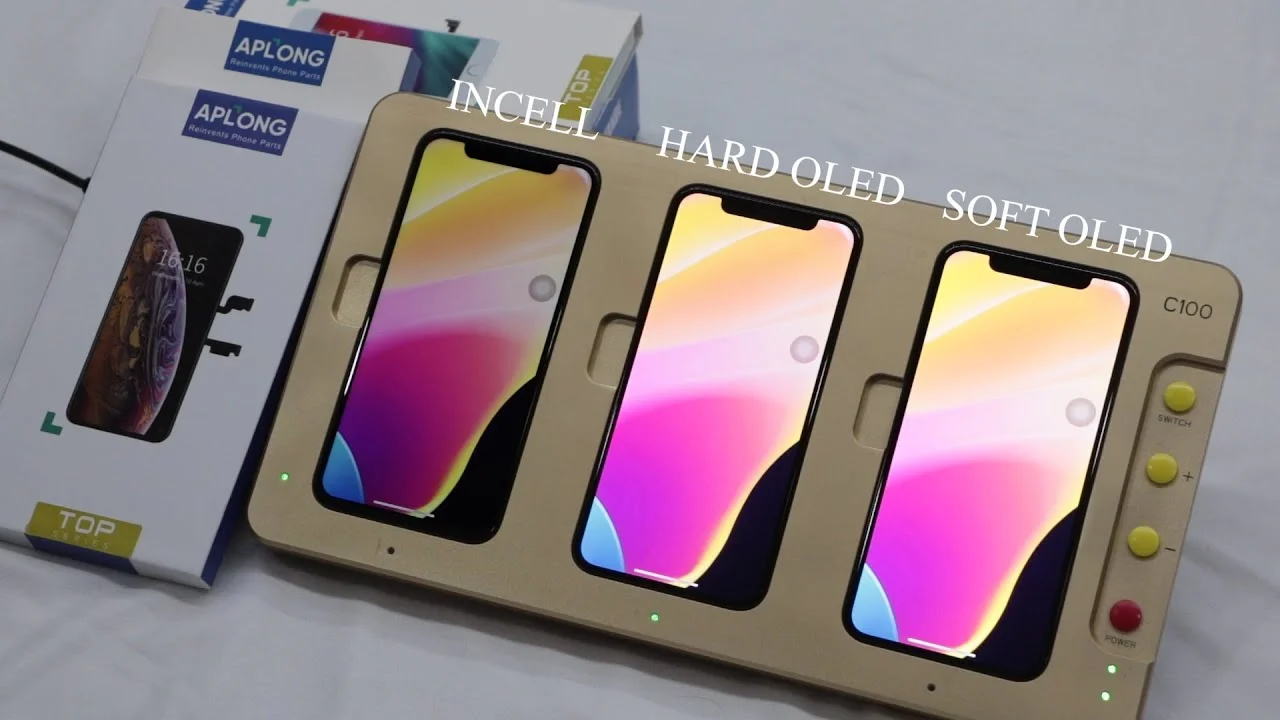
Understanding the differences between Soft OLED and Hard OLED screens is essential for anyone in the mobile repair industry. These two screen types may look similar on the surface, but their construction, durability, price, and performance vary significantly. Knowing these differences not only improves repair quality — it also helps you guide customers toward the option that best suits their needs and budget.
Before comparing the two variants, let’s explore what OLED technology actually is.
What Are OLED Screens?
OLED stands for Organic Light Emitting Diode — a screen technology that uses organic compounds to produce light when electricity is applied. Unlike LCD screens, which require constant backlighting, OLED panels are self-emissive, meaning each pixel lights up (or turns off) independently.
Key Characteristics of OLED Screens
1. Perfect Black Levels
Because individual pixels can shut off completely, OLED displays produce deep, true blacks — far superior to LCD panels.
2. High Image Quality
OLED screens deliver vibrant colors, excellent contrast ratios, high brightness, and wide viewing angles — ideal for watching videos, gaming, and photography.
3. Flexibility
OLED panels can be manufactured on flexible material, allowing curved edges and even foldable phones.
4. Fast Response Time
Excellent motion handling makes OLED perfect for gaming and fast-moving content, without motion blur or ghosting.
For a broader comparison, see our article “OLED vs LCD”.
Soft OLED vs. Hard OLED — Key Differences


